
Birthstones & Birth Flowers by Month: All 12 + Meanings
Every birthstone and birth flower by month — all 12, modern and traditional stones, each flower's traditional meaning, and the sun signs for every month.
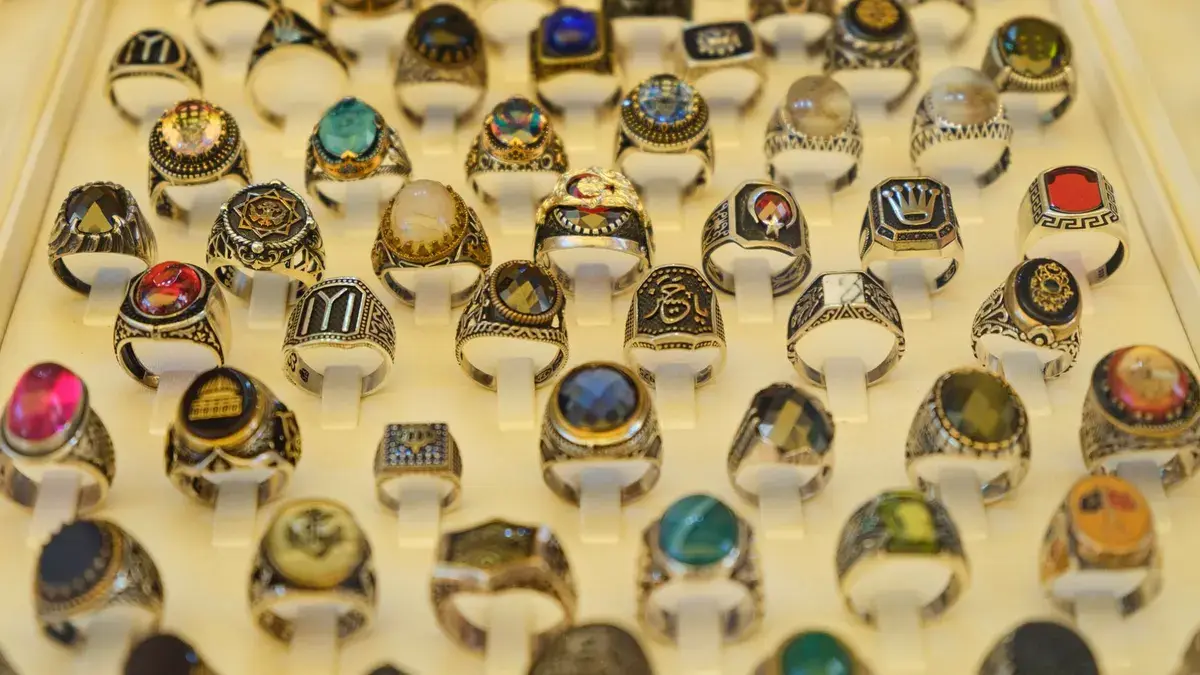
Your birthstone is the gem traditionally tied to your birth month — garnet for January, amethyst for February, on through turquoise for December. Below is the full month-by-month list, both the modern and traditional stones, with what each one traditionally symbolizes. To see yours alongside your birth flower and sun sign in one tap, use our free birthstone & birth flower finder.
What is a birthstone?
A birthstone is a gemstone associated with the month a person was born. The custom is old — often traced to the twelve stones of the breastplate in the Book of Exodus — but the list most people use today was standardised by the US jewelry trade in 1912. Each stone carries traditional symbolism worn as a small, personal talisman.
Birthstones & birth flowers by month
Here is the complete set. The first stone in each row is the modern primary; the flower is the month’s primary bloom.
| Month | Birthstone | Birth flower | Traditionally symbolizes |
|---|---|---|---|
| January | Garnet | Carnation | protection, vitality, enduring friendship |
| February | Amethyst | Violet | clarity, calm, a steady mind |
| March | Aquamarine | Daffodil | courage, calm, the steadiness of the sea |
| April | Diamond | Daisy | clarity, strength, enduring love |
| May | Emerald | Lily of the valley | renewal, growth, the truth of the heart |
| June | Pearl | Rose | purity, wisdom gathered slowly |
| July | Ruby | Larkspur | passion, vitality, courage of the heart |
| August | Peridot | Gladiolus | lightness, renewal, warding the dark |
| September | Sapphire | Aster | wisdom, loyalty, clear devotion |
| October | Opal | Marigold | imagination, transformation, play of light |
| November | Topaz | Chrysanthemum | warmth, abundance, steady confidence |
| December | Turquoise | Narcissus | protection, well-being, the open sky |
Modern vs traditional birthstones
The modern list above is the Jewelers of America standard — first published in 1912, then amended in 1952, 2002 (adding tanzanite to December), and 2016 (formally adding spinel to August). It’s the list almost every modern jeweler follows.
Traditional birthstones are older associations that sometimes differ. The most common departures: March was bloodstone before aquamarine, August was sardonyx, October leans opal where the modern list adds tourmaline, and November’s older stone is citrine. Neither is “more correct” — the modern list is simply the agreed retail standard.
Months with more than one stone
Six months carry options. June (pearl, moonstone, alexandrite), August (peridot, spinel, sardonyx), October (opal, tourmaline), November (topaz, citrine), and December (turquoise, tanzanite, zircon) each offer a second or third official stone — usually a more affordable or more available alternative to the primary gem.
Birthstone vs zodiac sign — which is “yours”?
This is the most common mix-up. The everyday birthstone list is keyed to your calendar month, while your sun sign is keyed to the exact day. Because each month spans two signs — July covers both Cancer and Leo, for instance — your month stone and a sign-based stone can differ. If you want the sign side too, our birth chart tool gives your exact sun sign from your date.
How to use this
Birthstone and birth-flower meanings are traditions, not predictions — small, durable symbols to reflect on, gift, or simply enjoy. Start with your own month: enter a birth date and you’ll get the stone, the flower, what each traditionally means, and the matching sun sign, all calculated privately in your browser.
Questions about this
What is my birthstone by month?
January is garnet, February amethyst, March aquamarine, April diamond, May emerald, June pearl, July ruby, August peridot, September sapphire, October opal, November topaz, and December turquoise. Six months also carry a second or third official stone.
What is the difference between modern and traditional birthstones?
The modern list is the Jewelers of America standard set in 1912 and amended in 1952, 2002, and 2016 — the one most US jewelers use. Traditional birthstones are older associations that sometimes differ, such as bloodstone for March or sardonyx for August.
Is my birthstone based on my zodiac sign or my birth month?
The common list is by calendar month, not zodiac sign. Because each month spans two sun signs, your month stone and your sun-sign stone can differ. Our finder shows your month stone and flower plus your exact sun sign.
Can a month have more than one birthstone?
Yes. June (pearl, moonstone, alexandrite), August (peridot, spinel, sardonyx), October (opal, tourmaline), November (topaz, citrine), and December (turquoise, tanzanite, zircon) each carry more than one official stone, usually to offer a more affordable or available option.
What do birthstone meanings actually mean?
They are traditional symbolic associations passed down through folklore and jewelry custom — garnet with friendship, sapphire with wisdom, and so on. They are offered for reflection and meaning-making, not as claims about health or fortune.
For reflection — not a prediction. Full disclaimer.